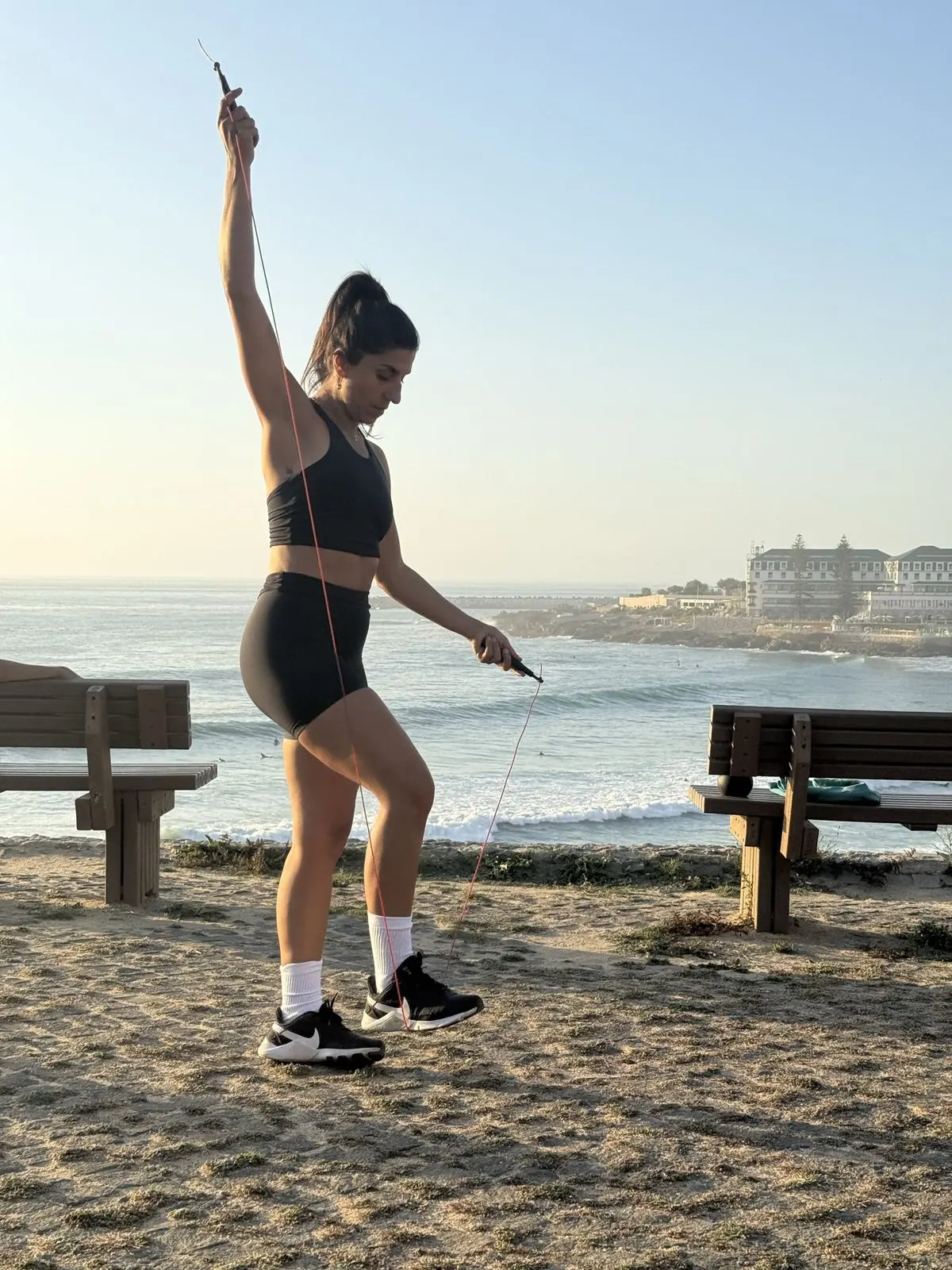
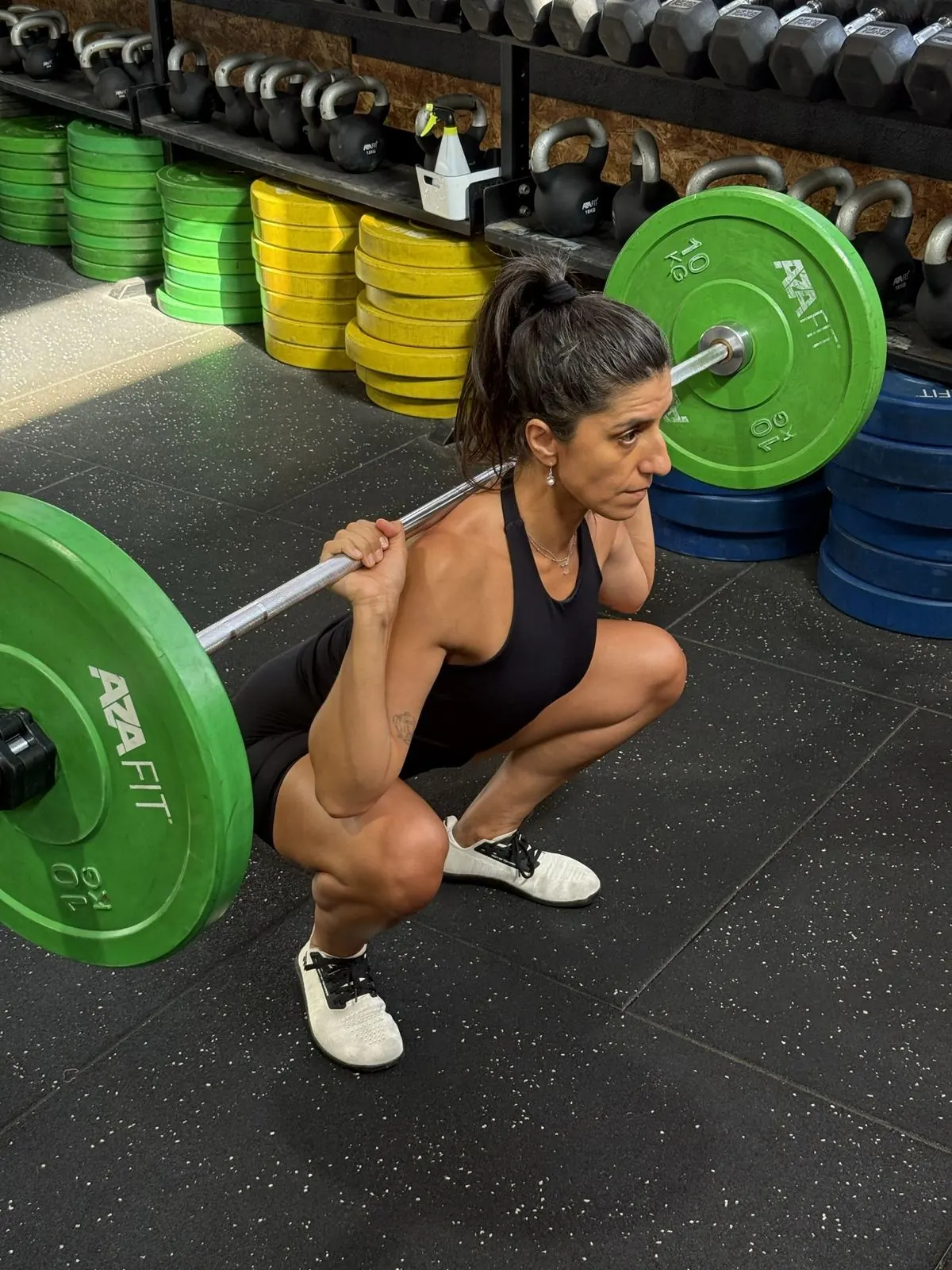
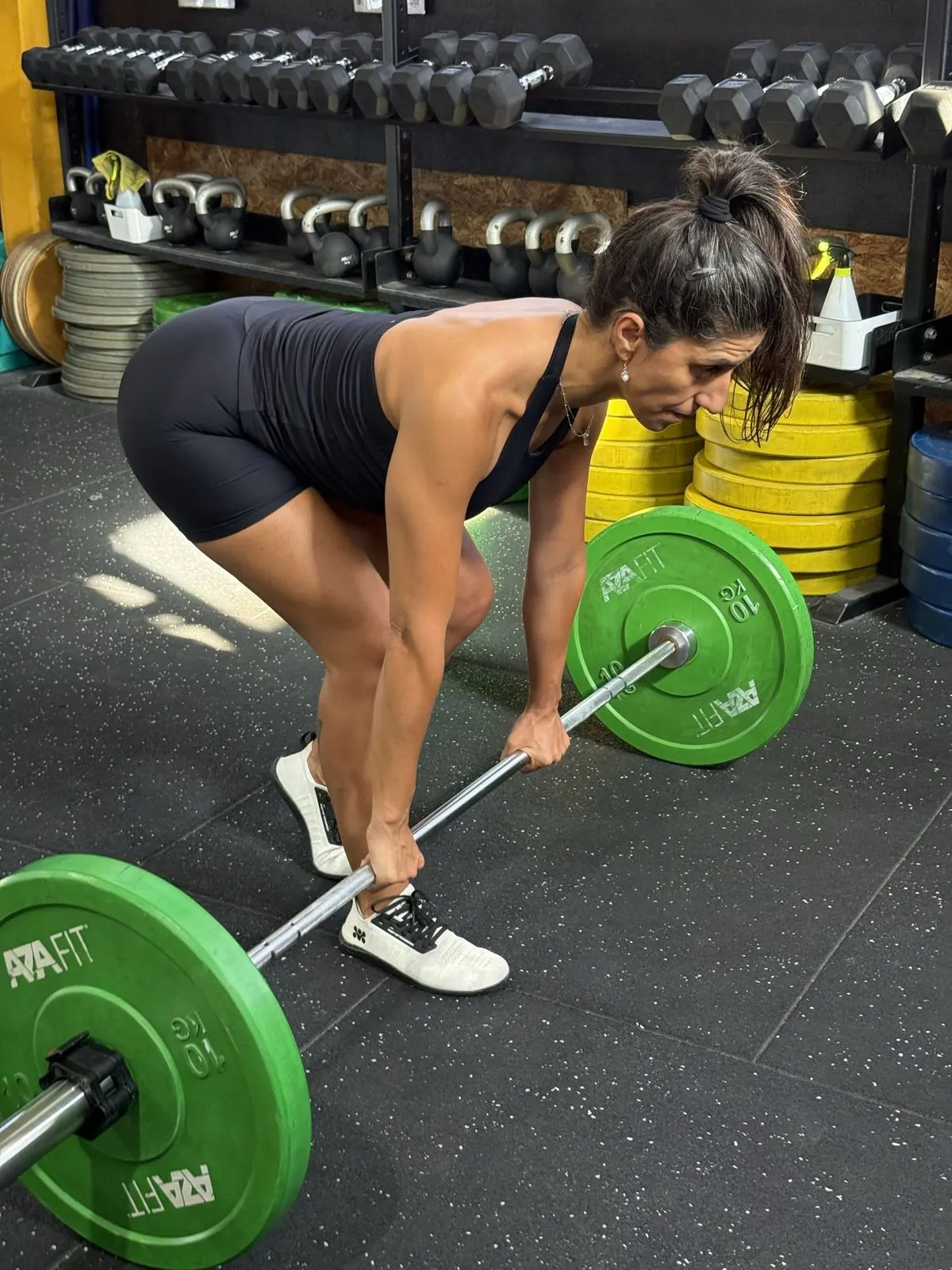
For many people it's the most complete combination of the week. Lifting builds strength and protects your joints. Yoga, in turn, offers deeper work on mobility, stability, endurance and focus. On the same day, the order depends on your goal and on what your assessment shows. When the priority is getting stronger, though, it usually works better to train strength first and save yoga for afterwards.
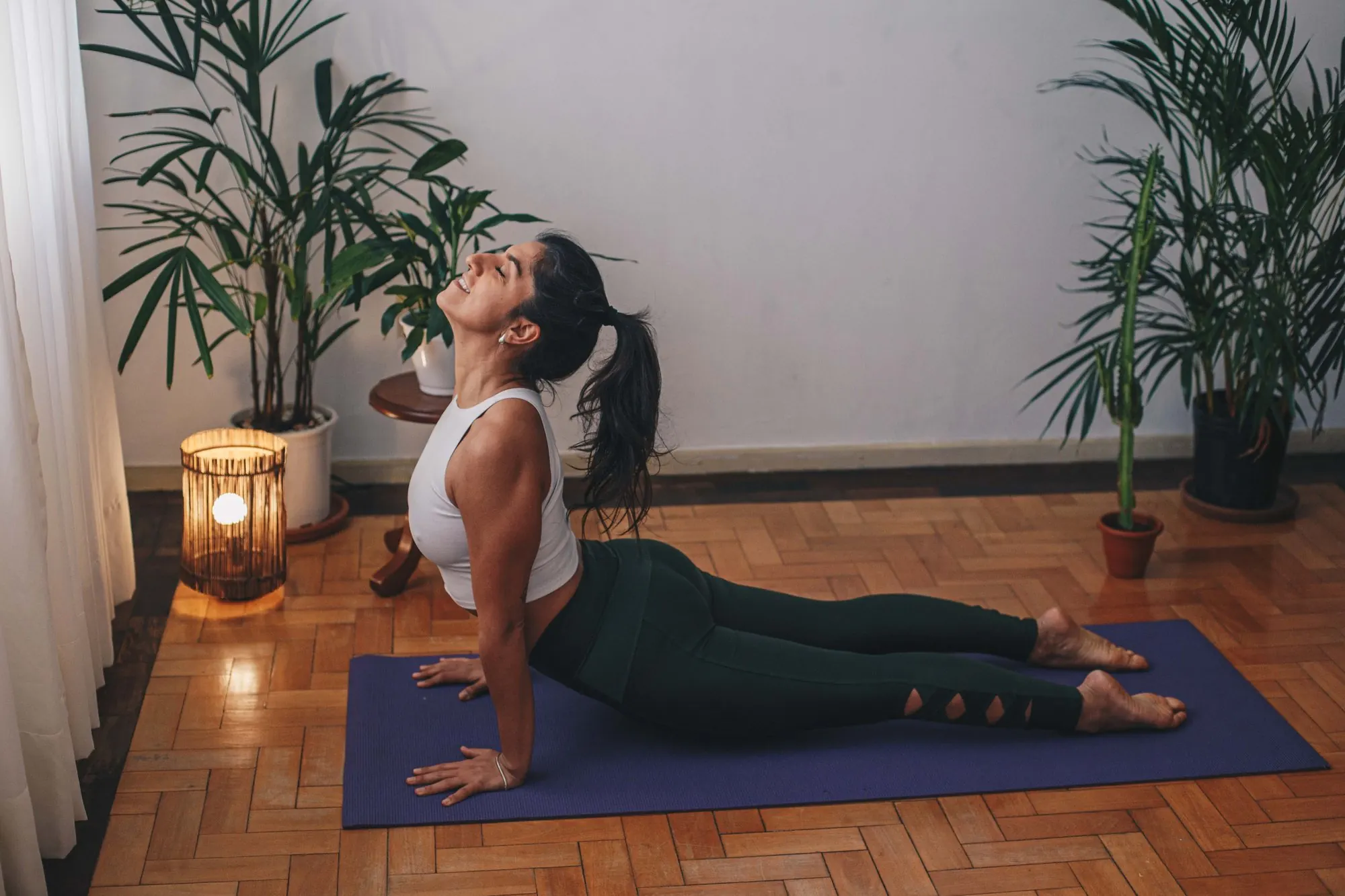
Which one to do first
There's no single right order for everyone. The best choice depends on your goal, where you are right now and what your assessment shows. Still, a few approaches tend to work well:
When your goal is strength. One option is to start with weights while your body is fresh. Afterwards, a slower yoga practice can help you wind down and get your range of motion back.
When your goal is to progress in yoga. If you're working on inversions, arm balances or more demanding transitions, it may work better to do yoga first, while you have more energy. Strength comes afterwards, lighter, or on another day.
When you want to use yoga as a warm-up. A few minutes of sun salutations, for example, can prepare your body well for lifting.
One thing to watch: holding a stretch on the same muscle for more than a minute, still and at a deep range, before a heavy workout can reduce your strength in that session. Before lifting, choose poses that keep you moving and go easy on the stretching. After training, choose practices that help you relax.
What strength training gives people who practice yoga
Better protected joints. A big range of motion needs muscles that can support it. A very flexible body with little strength can be more vulnerable to injury, and so can a strong body that is stiff and lacks fluidity.
New poses. Inversions and slow transitions demand strength. People who train with weights can get there more efficiently and safely.
The fibers yoga rarely uses. Yoga usually works at moderate intensity, relying mostly on slow-twitch muscle fibers. Loaded strength work and faster movements recruit fast-twitch fibers, which are exactly the ones we lose most as we age.
Stronger bones. Bone responds to load, and lifting weights is one of the most direct ways to maintain bone density.
What yoga gives people who lift
More range of motion. Movements like a deep squat or raising your arms overhead become more efficient when your joints are less stiff.
Breathing, recovery and body awareness. Controlling your breath under effort, recovering between workouts and paying attention to your own body are some of the skills yoga develops. They help you sense the intensity of each stimulus and how ready your body is for a given effort on a given day.
Every body, its own plan
The guidance in this article is a set of starting points. The order of the practices, the intensity and the frequency vary with each person's goal, history and current stage. That's why it's best to have a professional by your side who assesses your case and adjusts the combination over time.
A sample week
| Day | Practice |
|---|---|
| Monday | Full-body strength (40 min) |
| Tuesday | Yoga (45 min) |
| Wednesday | Strength (40 min) and slow yoga (20 min) |
| Thursday | Rest or a walk |
| Friday | Strength (40 min) |
| Saturday | Yoga (45 min) |
Two or three strength sessions and two yoga sessions a week already make a difference. The ideal split depends on your routine and your goals, and should be adjusted with professional guidance.
Does yoga count as exercise?
It does. The World Health Organization defines physical activity as any body movement that uses energy, and exercise as the part of it that is planned, structured and repeated with a goal. Practiced regularly, yoga fits both definitions. More dynamic styles, like vinyasa and ashtanga, can reach moderate intensity, while gentler practices count as light activity. The WHO also recommends strengthening your muscles at least twice a week: held poses contribute to that, and progressive strength training completes the job.
How this works at GB Movement
Strength training and yoga are on the same class schedule. Based on your assessment, we set the dose of each one in your training plan.
Want to find the right combination for your body? Book an assessment with Gabi.
Frequently asked questions
Can I do gym workouts and yoga together?
Can I do yoga on my rest day from lifting?
Will yoga get in the way of building muscle?
How long should I wait between yoga and weights?
Personal trainer (CREF 016030-G/RS) and head coach of GB Movement. She holds a degree in Physical Education from ULBRA and has been teaching movement for 20 years. Meet Gabi.
Published April 18, 2024 · updated November 15, 2026.