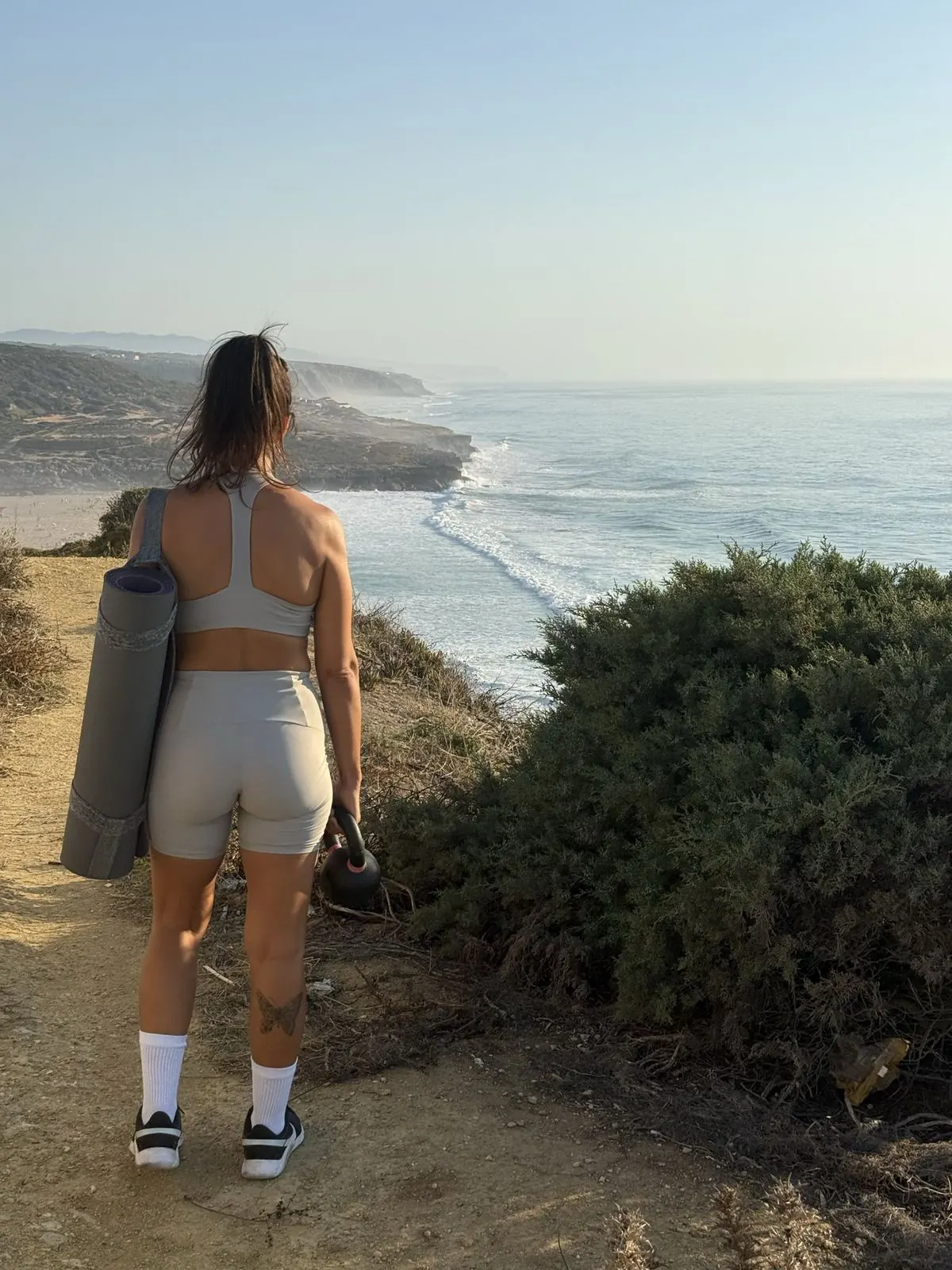
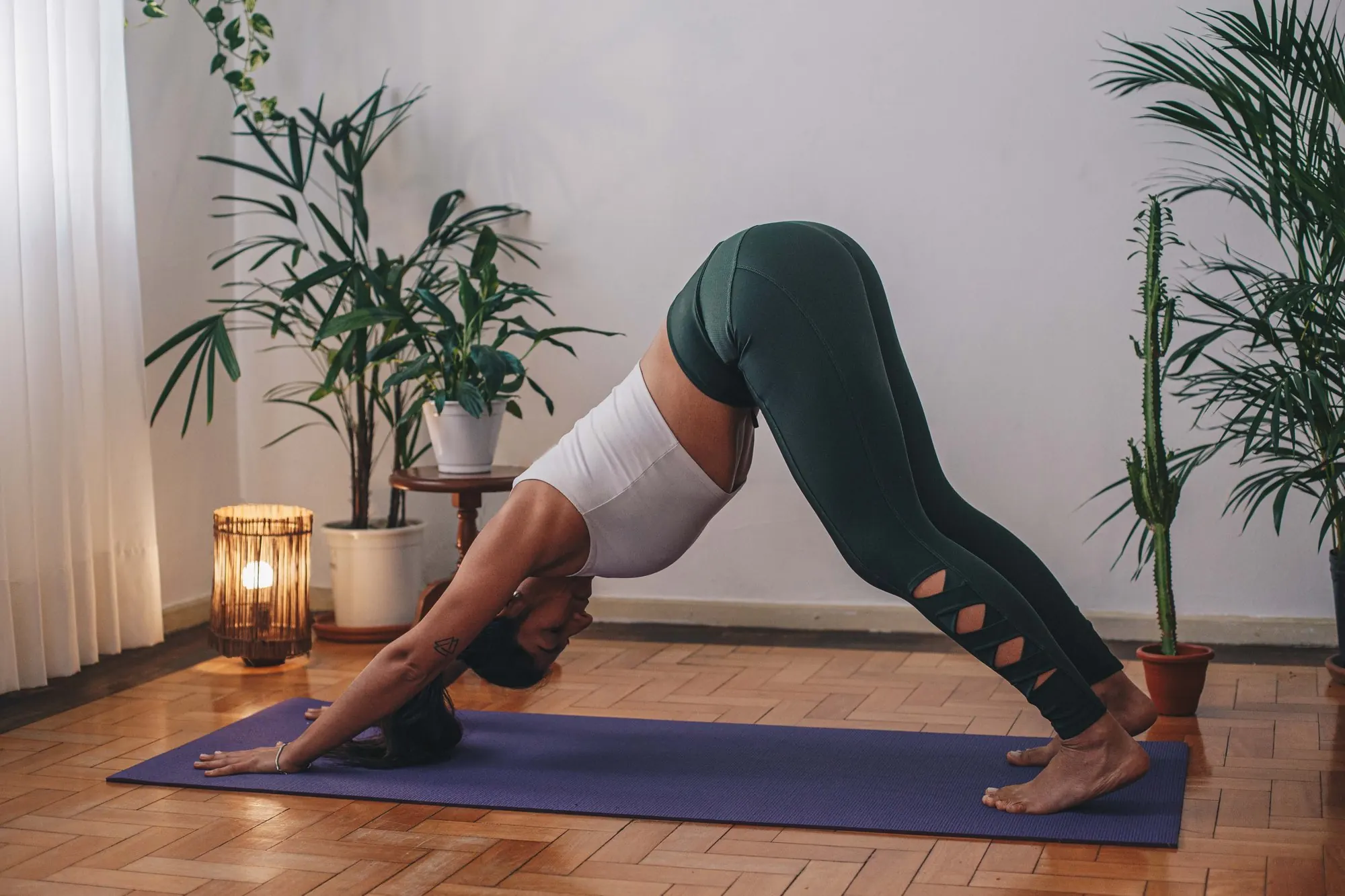
They do, as long as the workout gets harder over time. Muscles respond to effort, and your body weight gives you enough load to build strength and fitness, especially in the first few months. The key is progression: more reps, slower movements, pauses at the hardest point and single-leg or single-arm versions.
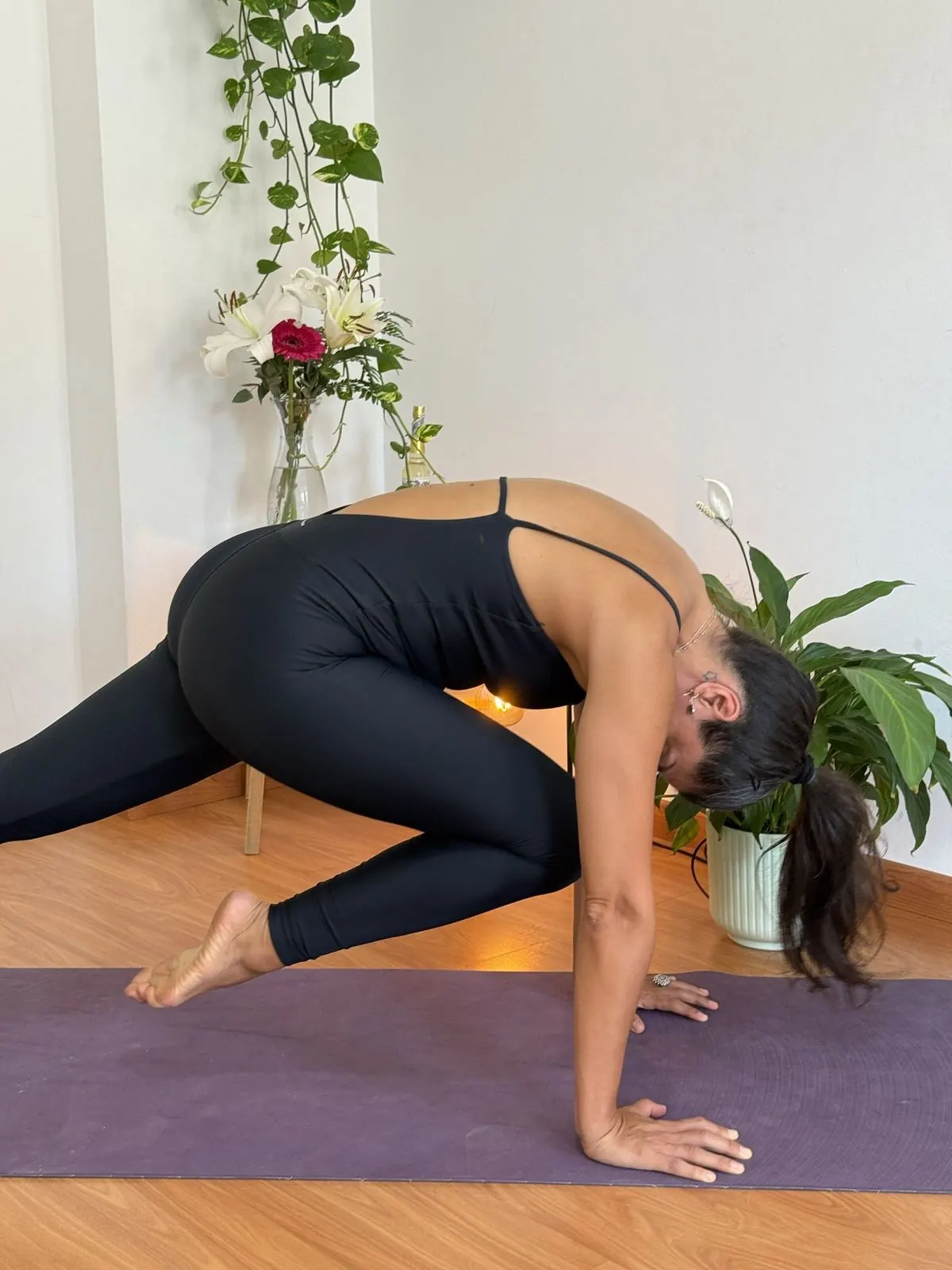
How to make bodyweight training work
- Slow down. Taking three seconds to lower into a squat changes the exercise completely.
- Pause at the bottom. Two seconds still at the hardest point.
- Go single-leg. Bulgarian split squats with your back foot on the couch, single-leg glute bridges.
- Increase the lever. Push-ups with your hands lower, planks with your arms further forward.
- Rest less. The same circuit in less time.
A simple rule: when you can do every rep with room to spare, increase one of these.
The 30-minute workout
Warm-up (5 minutes) March in place, arm and hip circles, ten slow squats, ten cat-cows.
Circuit (20 minutes) 40 seconds of work, 20 seconds of rest. Go through the whole list and repeat four times.
- Squat
- Incline push-up with hands on the couch or a table
- Alternating reverse lunge
- Glute bridge
- Plank
Cool-down (5 minutes) Hip and chest stretches, plus two minutes of slow breathing with the exhale longer than the inhale.
How many times a week
Three times, on alternate days, is enough to see results as a beginner. On the other days, walk or do a mobility session.
When to add weight
When the exercises feel easy even in their hardest versions, a band and a kettlebell open up a lot more at home. See kettlebell workout for beginners.
Want to train at home with someone checking your technique? Book an assessment in a live group.
Frequently asked questions
Do 30-minute workouts work?
Will it help me lose weight?
I live in an apartment. What about noise?
Personal trainer (CREF 016030-G/RS) and head coach of GB Movement. She holds a degree in Physical Education from ULBRA and has been teaching movement for 20 years. Meet Gabi.
Published October 3, 2026.